[a] millennial reservations

Culture, Sports, Writing…or whatever

millennial content vol. viii: gently failing at being 20-something

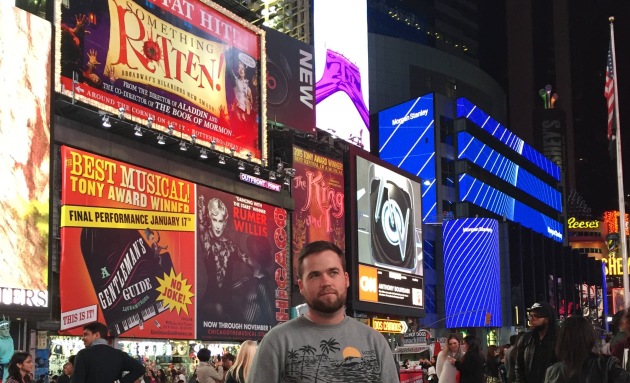
IMG_5913-1.psd

I don’t think I’m very good at being a 20-something. I’m in the bottom half of the bell curve at least. If being a 20-something were really the fairytale race it’s so often depicted, I would be neither the tortoise nor the hare. I’d be more like if a sloth fused with a manatee after shoving down two whole roast chickens from your local grocery deli; I’ll get there, but, um, don’t wait up for me.

(One of my proudest high school achievements was while working at Winn-Dixie—the underwear skid marks of Florida grocery stores—I bare-handed inhaled an entire lemon pepper roast chicken on my 30-minute break on a co-worker’s dare and somehow didn’t get fired—despite almost puking twice in a customer’s shopping bags, and also disappearing for an hour in the bathroom—as I trundled through the rest of my shift like 25-pound sandbags full of greased chicken were attached to every limb of my body. You might also be surprised to learn I didn’t lose my virginity until college.)

Looking around me, everyone seems better suited for this 20-something lifestyle than I am. I’m not saying this as criticism of my generation’s tendency to only post about the *lit*, aren’t-you-jealous moments of their lives on social media so I feel FOMO and jealous and wish I was someone else. And I’m not throwing a pity party regarding possible advantages or early successes my peers might have had, ones that cause thoughts of re-imagined pasts full every possible connection and break a lucky guy could have. And I promise you I’m not leering over the fence, wondering how so-and-so has “figured it out” while I haven’t, desperately wishing someone would hand me the correct blueprint to follow. Because if there’s one trait I’ve learned defines being a 20-something, of being a 21st century human, I wholeheartedly share, it’s that deep down, in some branch of their life, no one has their shit together.

So yeah. None of that stuff really bothers me. Well okay, it bothers me a little, but I don’t find it troubling, it doesn’t keep me up at night. It’s mostly cool, I guess. Instead what unnerves me is this idea of being a 20-something, and how we should all cherish the chance to stay a big kid.

Within the past 20 years or whatever this idea of having an “extended adolescence” has become more obligation than option. You kind of can’t grow up in that traditional sense—own a house, start a family—in your 20s anymore, especially if you live in any thriving, even semi-metropolitan area. It just costs too much. Perhaps the adultlike distinction of getting married remains an available recourse, though you a) would likely need significant financial assistance from loved ones and b) makes no mention of the convoluted, fucked-up dating scene currently available to most singles in their 20s. Don’t worry, we won’t venture down that sidewinding tangent of millennial dating. But know that over the past 50 or so years the median age of marriage increased from 21 to 27 for females and 23 to 29 for males. I don’t think that’s a random coincidence!

But owning a house, starting a family? In this economy? With this tunneling pit of debt filled with college loans preemptively saddled upon me as precedent to even possibly entering this economy? Can I get out of this hold I find myself in first?

I want to catch myself before painting some massive swaths of generalization here, but the pressures of overpopulation (some of you refuse to die), our still-freshly interconnected global economy, and technology improving so rapidly and so widely, rendering more jobs obsolete as more overly qualified people compete for this dwindling job pool, does rather complicate things. I know this is where the boomers and reformed hippies interject that a threat like automation has loomed dangerous for the past seven hundred decades and hasn’t destroyed us yet, so stop worrying. To which I’d say: Saudi Arabia became the first country to grant citizenry to a robot last week—a robot that literally said “Destroy all humans” just a year ago!—so yeah, I’d venture to say things are a little different. Cryo-freeze Arnold Schwarzenegger now or else we’ll have no chance to save humanity.

Wow this post derailed quickly… Anyways! That tangent served to underscore my growing theory that “extended adolescence,” once a kitschy term for morning talk show segments and Gallup polls, isn’t a trend. It is the future reality. If 50 is the new 40, being 25 is the new 15. For so many 20-somethings that’s the truth: They still live at home with their parents, can’t find a girlfriend, and stuck bussing tables as any means of income. This week you mopping floors—and if you’re really ambitious—next week it’s the fries. Yeah…that’s nice.

Most blessed enough to obtain work in their desired field are scraping by or somewhat compromising what they really want to be doing. (Hold that thought.) The kids who couldn’t find work and don’t live at home resorted to the only option they had left: grad school. Yay, more doubt and debt!

Apologies for painting a soulless, cynical picture, because I promise you I know it’s not that bad. Really, it’s fine. I’m fine, you’re fine. Maybe some of us have a small drinking problem, but like just don’t start injecting heroin and it’ll probably be okay, fam.

What am I saying? Something like that a contradictory tension undergirds being a 20-something and no one openly discusses it enough to my liking. On one hand you’re instructed to embark on a free-spirited adventure because there’s nothing like being in your 20s. Splurge on adventures, travel, and don’t worry about that developing gut of yours. If you lack the funds now, just put it on the credit card! You got time, you’re in your 20s! On the other hand, you’re supposed to be #hustling, with plenty of (maybe) experts cramming into you 12,000 lifehacks to implement daily—“Bro, buy these $69.95 nootropics, cut out gluten, and microdose penicillin to achieve grind goals of working 34 hours a day.” You’ll have to wait on those simple joys of being a human—love, nature, laughter—because right now you should focus on your brand and know your Plan to Success™. Thanks to the internet, you have all the tools you could ever need, why aren’t you winning yet?

It all makes you want to yell, “Can’t I just be a fuckup sometimes?” Really it’s overwhelming and we haven’t even discussed the glut of news, opinions, and other bullshit you should be up to date on, like, two news cycles ago. (You might even be reading this as alternative to engaging with whatever latest controversy or scandal that everyone’s sharing their trite opinions on.) This, I reason, is why most would rather curl up on a couch and binge the latest mediocre Netflix show now available to stream. Seriously no judging—it’s easier that way.

But if you do the research and survey the data, only one reasonable conclusion remains available. It’s so obviously boring I don’t even want to type it out. Really, it’s so simple: You just can’t give up. Survive and keep trying as much as humanly possible. Continue knocking on that door because you never know when it’ll open for you—could be tomorrow and it could be when you’re 43. You really must steel yourself for that possibility. Your dream job or dream project might not come for that long. But you have to know it will come if you continue to put forth the effort.

So why do I suck at being a 20-something? Because I know all this shit and it doesn’t comfort me any. I should revel in this beautiful struggle, but I impatiently can’t. I just want to know the latest first step I’ve taken is the right one and I promise I’ll put my head down and just work if given that confirmation. Yet even that admission carries with it this strange guilt, knowing how utterly first world problem/white people problem this all is. Part of this, too, stems from entering the downward stretch of being a 20-something (I’m closer to 30 than 20), where your core foundation of who you are is mostly figured out, but some lingering insecurities persist as you piece together the final building blocks.

I read this quote from an actress—it was either Lizzy Caplan or Tina Fey—basically saying how once into your 30s, you kind of just are who you are, and all this anxious worrying falls away. That thought comforts me. I cling to it, really. I think I’ll be better as a 30-something anyways. My beard will look cooler at least.

For now I’m just doing my best to shut off this side of my brain and continue doing what I’m doing. Steer into the insecurity and fear as always. Writing all this down helps. So does that conventional wisdom of travel I gently mocked. People repeat it because it’s true. Sometimes you just need to get away from it all. This is why I’m disappearing to Japan next week and intend to eat every udon noodle and piece of sushi I can find. I might come back with my gut looking like a sumo wrestler’s. But hey, I’m only in my 20s. I still got time, right?

< 3 Sashimi Bren

image1

On Donald Trump’s great, big, dumb American dream becoming real

Donald Trump

Donald Trump has always had a large imagination, but he really outdid himself this time. He imagined a country so furious with change, liberal elitism, and corporate takeover, it would fall prey to a bile-spewing, egomaniacal demagogue.

He imagined an anger and despair permeating amidst the white working-class, those left behind amidst globalization and automation and Silicon Valley philosophies. People who not only felt ignored and unheard, but also they were being told what to say and think and feel through PC policing and mainstream media tsk-tsking. How much those people loathed the status quo. He recognized that divide and drove a nuclear warhead into its cracks, crafting strict tribal battle lines and catch phrases as weapons to fight for themselves.

He imagined a nation that did not care for policy or political experience or the realistic machinations of federal government’s purposely slow-churning mechanisms. He imagined an election that was never about policy. Instead one about anxiety and how rapidly the world’s rearranged itself; that what we wanted during these unstable, volatile times was not to march forward, but step backward when things were “great.”

Trump imagined a citizenry who cared more about saying “Merry Christmas” in classrooms than its Muslim neighbors’ religious freedoms, steamrolling over founding principles because it made them uneasy.

He imagined a giant “whitelash,” as CNN’s Van Jones labeled it, over eight years of America’s first black President, eight years of blank faces carrying names like Trayvon Martin, Mike Brown, Alton Sterling, and Freddie Gray shoved into their alive ones. He imagined how uncomfortable that’d make some white folks, how squeamish this paragraph makes them, how they resented the very idea their complicity meant they were somehow at fault. He imagined how they’d much prefer placing blame on black communities while hiding their blood-speckled hands behind their backs, because wasn’t it their fault.

He imagined that America’s rape culture wasn’t just alive, but thriving. That perhaps some men didn’t cringe, didn’t shudder, didn’t enrage at the thought of daughters, sisters, mothers, aunts, and cousins being “grabbed by the pussy.” He reminded people there was a man’s place and a woman’s place and maybe we ought to return to those roles. Back to women as something to be possessed by men. Perhaps his greatest leap in imagination laid in this arena—he imagined a majority of white women didn’t mind every demeaning, defiling, disgusting, depressing, downright shitty thing he says about them.

Like FDR with the radio and JFK with TV, Donald Trump imagined just how influential social media might be. What people needed anymore wasn’t “Hope;” they wanted a villain. A guy who’d Tell It Like It Is. Someone in contrast to those damn Dems who loved positing themselves as Good Guys saving everyone and anyone. That what earned a response now wasn’t peace, love, and positivity, but exclusion, exile, and hatred.

He imagined how a celebrity-driven, content-churning, drama-addicted media culture would love his ignorant rants and his trolling interviews. He imagined that what viewers craved wasn’t the blueprints of a Free World, but Real World.

He imagined so many others too simply didn’t believe in global warming, that it was a hoax, and I’m quoting, “created by and for the Chinese in order to make U.S. manufacturing non-competitive.” Those same people too wanted the EPA disbanded, retract carbon emission regulations, and clean energy to go fuck itself.

He imagined a fear-mongering constituency that wanted walls built on our borders and waterboarding—along with harsher torturing techniques—brought back. That to defeat our enemies we just needed to “bomb the shit out of them.”

He imagined so many livid over Obamacare’s flawed, frustrating system that we should repeal it all—“it’s a disaster”—forget the people’s live it does save. Who cares if America remains embarrassingly behind among world economic leaders in granting citizens universal healthcare? We’re taxed enough as it is.

He imagined a country that didn’t care about minorities and LGBT rights and children with disabilities nearly as much as it pretends.

Donald J. Trump imagined that America would rather vote a xenophobic, unqualified, hate-mongering, racist, alleged-rapist, inexperienced, orange-dyed, anti-intellectual, military dunce, KKK-endorsed, lifestyle-brand blowhard, bankrupt businessman as President over a woman. A very flawed woman with questionable character, but one with more than 30 years of experience and a track record of at least trying to help people.

Beyond all figments of reality, Trump imagined becoming President of the United States. Now he will be.

If the rest of us have any hope surviving these four years, one thing rings out obvious: we all need to start using our imagination a helluva lot more.

millennial content vol. vii: childish oregon trails lead to fruit basket skies

fullsizerender-4

The skies above us never beg our attention. Souls cross ages like clouds cross skies, yes, but the skies aren’t the same and neither are the ages. The cloud atlas changes. Didn’t you know? That everything’s different? Everyone’s just indifferent, though.

I hated the city’s sky. My gentler self suggest we soften that verb to loath or dislike but no: I fucking hated the city’s sky. All cities. No city has a wonderful sky. I guess skylines are fresh. Okay, we like city skylines. But the skies, like souls, get lost in the city.

“Go west, young man,” my aunt suggested. Okay, it wasn’t really a suggestion. I was already on my way west, headed to Texas for new prosperity. A new job that laid me off a week to the day I arrived. That was later, though. On my way, playing pretend I was, getting my Oregon Trail on in this bitch.

Remember? Playing Oregon Trail in school? How we used the shitty kids’ names for characters? And we rooted for them to die?

That’s right: Die of dysentery, Michelle. You told the whole school I had a crush on you. I did. I still kind of do. But dysentery just claimed your ass. Why? Because I forced you to cross that river. You and Cody. No fjord-ing up in here, up in here. Y’all bitches gonna die up in here, up here. I am God and I always have been. Awe my power.

Cody got eaten by bears, though. Childhood was weird.

Was everything shittier back in the day? People died of dysentery so, like, it must’ve been? They say so anyways. I don’t know if I believe them. I don’t know if I believe anything. Maybe Elon Musk is right: We’re all simulated programs. People die for such silly reasons now. Other animals die because someone eats them.

“Wanna know the No. 1 cause of death for humans?” “Sure.” “Other humans.” “Yeah or their own heart kills them.”

Or we die because we stuff ourselves to death: misery, cocaine, empty sex, dreams, booze, false promises, family, and whatever else you’re filling yourself with these days. Maybe we’re all just guilty for leaving the food chain. It still doesn’t explain Trump.

Anyways, the skies. The skies in Texas top my list. Back home, on the beach, ocean and wind team up too often: blowing away clouds, manifesting storms, purpling and graying the sky. A portrait never settles long. It all changes too often. This is probably a metaphor.

My aunt telling me, “Go west, young man,” instilled a sense of adventure into my proceedings. Me and my road trip to Texas, that is. (Who thought I’d ever end up in Texas?) But who has real adventures anymore? We have *adventures* shared on social media or whatever. Stuff performatively done to tell others about later.

But real adventure includes an indeterminate ending. Telling someone “Go west, young man,” was more like “Goodbye forever.” Because you’re probably not coming back from that adventure. Because you’re probably gonna die. We go home to Netflix and chill and (probably not) fuck.

“Get a load of this: The Kid’s preaching again. Real original, we’re super interested right now.”

Okay, okay. No bullshitting: I sit behind a desk for hours inside, air-conditioned, safe, and plump. Mostly work’s good, but I’m susceptible to those days like everyone else: Just what is the goddamn point here? Am I wasting away my days? I don’t think I am. But some days I don’t know.

I escape for walks on those days. I learned this trick in the city. Coax the mind into emptying that garbage thought with outside air and movement. Once in a while, things will look up, and I’ll look up, and see the Texas sky, almost crying at its brilliant beauty, wondering if the skies here really are that great. I interrogate if this is some Plato thing, like this is the first time I’ve ever really seen the sky? Only this keeps happening; I’m repetitively enlightened. This is my story: The Allegory of Returning to My Cave Because It’s Safer There.

I need to describe this sky to you. Seriously, I’m not ironically posturing for once. These clouds grow so big, stretching eons, billowing, puffing, so full and vital and robust. They’re so white, like purer and somehow more colorful than other white clouds, which I know only kind of makes sense—white is the presence of all colors, right?—but I swear if you were here you’d agree. And the blue background has this variant shade to it. You know how people visit the Caribbean—Bahamas or Cayman Islands or whatever—and everyone agrees how crystal blue the water is? The subtext there is simple: Ocean water should always be this blue. It’s too stunning not to be. That’s how I feel about these skies: I always want my clouds like giant Pillsbury Dough Men and my skies shimmering like schools of Caribbean sea life.

I was driving a bit recklessly Sunday evening. After suffering the Kafkaesque horror of mattress shopping, walking away with nothing, waiting so I may weigh my options sufficiently (adulthood’s just as strange as childhood), I rushed to catch the sunset. I headed to this spot here where everyone gathers to watch sunsets, this cliff ridge overlooking the river. When I arrived, cars lined the sides of the highway. Packed and panicked, it was. I ended up missing the actual sun set, that nuclear-fissuring gas ball dipping below the horizon before I’d posted up.

What I saw instead was somehow better. How phony I always considered those Renaissance paintings with skies hued like a fruit basket: peach and grapefruit and clementine and watermelon colored. (What a strange fruit basket that’d be.) I just never thought those kind of skies existed. Like most of my assumptions in life, I was wrong. They’re real. I saw one. You can to. Just look up.


The Fart Plea(se): On ‘Swiss Army Man,’ aka that ‘farting corpse movie’

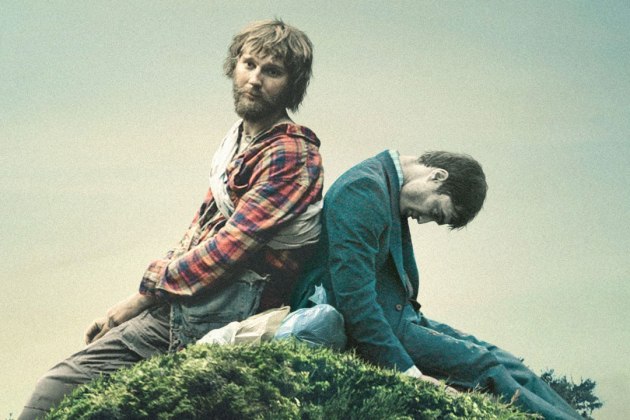
swiss-army-man-trailer-pic

What a way to describe a film. The “farting corpse movie.” As if it were a loaded genre or something. If you read any coverage regarding Swiss Army Man—directing duo Daniels properly announcing their singular, exciting voice in American cinema, Daniel Radcliffe finalizing his evolution from Harry Potter into one of our best young actors, Paul Dano pushing his vulnerable outsider archetype farther than ever before, Sundance’s divisive reception of the film, that beautiful score—you will read that phrase. The “farting corpse movie.” One article went even farther, calling it the “farting boner corpse movie.” None of these descriptions are wrong.

What do you think when you read that? It excites me, but I’m strange. Before watching a different film, the Swiss Army Man trailer played, and I sort of shared this moment with a worker at the theater. I was running late (usual) and he needed to check my ticket. “That movie—I can’t wait to see it,” he admitted, like he was sharing a guarded secret. “Oh, me too,” I said, perhaps a bit eagerly. He paused, administering a strange look, then walked away, probably to do his job.

It’s weird. Even now I’m finding it difficult to outright say I fucking love this film. In conversation, trying to convince others to see Swiss Army Man, I preface my enthusiasm with all these qualifiers: “You need to know, it’s a strange journey…” “Do you think farts are funny? You need to. Farts can be so beautiful, too…” (this was a failed pitch, obviously) “I can admit: it’s probably not for everyone but…” “It’s known as the ‘farting corpse movie,’ which is a loaded description because…”

No qualifiers: Swiss Army Man regards a hopeless loner teaching a farting corpse what it mean to be alive. When the film opens, we learn this man, Hank is his name, is trapped on a deserted island and given up hope he’ll ever be rescued. So he decides to hang himself. His first attempt fails, the rope snapping, but during his second go, he spots a figure washed ashore. Maybe a rescuer, or a friend, someone who can help. But Hank discovers the figure is a dead man, a corpse, and loses hope once again. He attempts to kill himself once more, but can’t prepare himself to commit because this corpse keeps farting. It’s a scene so dark and perverse, yet deadly hilarious. I couldn’t stop laughing that a suicide attempt failed and failed and failed because of a dead guy’s slapping flaps. The film confronts your own self-image throughout in this subverted way: Will you let yourself laugh? Are you willing to submit yourself down this fart-fueled rabbit hole? Because there will be absolutely no hand-holding on this ride. Deal with it.

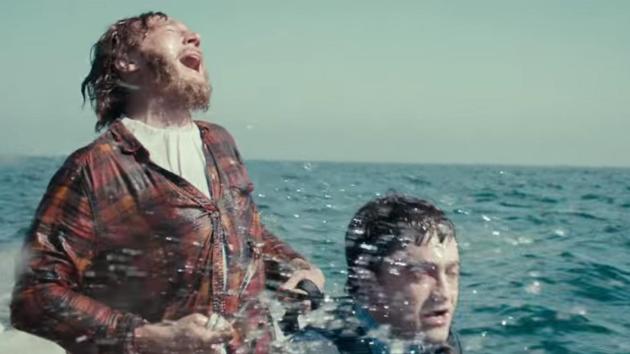
And what’s more: they follow that kind of sardonic, childish humor with the most gorgeous and cinematic shot I’ve seen in movies this year. Hank approaches the corpse, now washing in the waves, and realizes he can ride this farting corpse like a jet ski and escape this wretched island (“fart-fueled” is a very purposeful adjective). He does, the camera cutting wide, water splashing every which way, the ocean shimmering with it serene blues and whites, these two filthy bodies riding into the sunset.

swiss-army-man-fart-skiing

Oh how often we escape one prison to find ourselves trapped again. Hank and Manny, the aptly-named corpse, wash up on another shore and must find their way back to civilization. As Hank confides more and more in Manny, the corpse becomes alive. He can collect precious rain water in his gullet. Thanks to set-in rigor mortis, a snap of his fingers produces a spark to light campfires. Projectiles launch from his mouth to hunt food and access out-of-reach places. Manny can do anything. “A multi-purpose tool guy.” A Swiss Army Man.

But realizing one’s potential only qualifies but a fraction of life’s meaning. Because when Manny discovers a photo of a beautiful girl in Hank’s phone, he learns about love. Now here’s where the movie ruptures itself open; inside this screwball buddy comedy, lies a sensitive soul desperately wishing to connect with you.

Most cinema, most stories, are illusions. Sitting in a dark movie theater with other people, or home alone on your couch, it’s easy most times to give yourself over. To exist inside the greedy violence and backstabbing paranoia of The Godfather, or the postmodern and campy ADHD of anything Tarantino makes, or even the saccharine drippings and feel-good reassurances of a Nancy Meyers flick. You might have your issues, but it’s not too difficult to jump aboard.

Those directors, and the large majority of films in general, ground their worlds in the objective world we all live in. The gangsters of Goodfellas live by a code, a giant shark terrorizes our waters in Jaws, the chaotic war zones of the Hurt Locker and Zero Dark Thirty all exist as possibilities in our world, some more so than others. The experiences may be heightened, tripped-out, and unlike anything we’ll ever personally see, but we recognize it as real.

Directing duo Daniels have zero interest in pretending. They’ve worked mostly as music video and short film directors and you’re likely familiar with their most famous work, the music video for DJ Snake and Lil John’s “Turn Down for What.” My face melted the first time I watched it. It’s so absurd: The beat causes listeners to lose control of their bodies, and as a result, they literally bring the house down. Dicks and giant knockers bounce to the beat. And it makes sense within context: That song does sort of make you go wild. If you’re at a club or rave or whatever, try not to dance, try and fight the feeling. You will lose or you will die from the crazies around you.

Daniels really like literalizing how experiences and emotions feel, as they did with the very-NSFW Joywave’s “Tongues.” Trying to describe what they do in the short-form generally either spoils or dilutes their work. With this video, you end up with some slightly patronizing derivative like the “hippie-hunter Romeo & Juliet music video.” Sure, it works. But goodness it’s so limiting to discuss art on this level.

https://vimeo.com/98653191

Now, they’re not the first directors to work in that surreal/metaphorical space. Daniels is descendants of the Spike Jonze-Michel Gondry-Charlie Kaufman triumvirate. Projects like Her, Eternal Sunshine of the Spotless Mind, and Synecdoche, New York take place in alternate realities similar to our own with dreamlike logic and technologies. And on some level, we’re experienced with so-called grounded and realistic movies pushing metaphor and analogy on us to create meaning within a narrative. It’s no coincidence Spike Lee’s Do the Right Thing happens on the “hottest day of summer” or Andy Dufresne must escape prison and crawl through “300 yards of shit” for his true freedom in Shawshank Redemption. We understand what that points toward within those stories.

So I’ll ask: What does it mean that a guy who ran away from home and wanted to kill himself must teach a dead corpse how to live and love and be happy and in the process learns those things for himself? Because what happens over the course of the film, as Hank tries to teach those Big Ideas About Life, like a parent instructing their child, is that we realize how much Hank closes himself off from the world. There’s a great moment, featured in the film’s trailer, where so no real spoilers Manny says in that deductive way children can, “You want to go home so you can have love but you ran away because nobody loves you.”

Many have felt that way—that nobody loves us—at one point in time: after a breakup, a death in the family, leaving home for the first time. And when Hank responds to Manny, teaching him proper decorum—“You can’t just say anything that comes into your head, that’s bad talking”—you start to recognize the barriers we impose on ourselves as humans. We limit our potential. The dead guy can do anything, he begins walking on his own and thinking for himself. He’s a swiss army man. But what about all of us who are alive?

It’s around this point the film dares you to consider how much the farts really matter. And you do start to wonder. Why do we treat farts like it’s the worst part of ourselves? Why do we hide such a universal experience, a bodily function we hold no control over, one that can be so goddamn funny, from the people we love most: a girlfriend, a dad, a grandmother? Trust me, I accept how fucking crazy that reads. Like, come on, it’s just a fart, dude. Not that important. Normally, I’m apt to agree, but the sorcery of this movie is that it doesn’t sound crazy after watching it. When Daniels first pitched this movie to Paul Dano, they said, We want to make a movie where the first fart makes you laugh and the last one makes you cry. Dano was in from there (I would’ve been too), and if you buy in all the way, you’re probably granting the filmmakers that wish.

The film throws these inversions and ideas at you constantly. You can’t believe some of these thoughts usually held private within your own mind are being said out loud and on screen. They’re just too, well, weird. But removed from the whims of society, and the burden of respecting others, Hank’s able to admit these things through Manny. And he realizes something we all say but never fulfill: Only you decide the definition of your life.

To teach him, Hank performs that concept for Manny: He analyzes his own life, lays bare his insecurities, and tells his captive audience stories, which are tools to demonstrate what it means to be human. Could there be a more fitting description of art is to its audience?

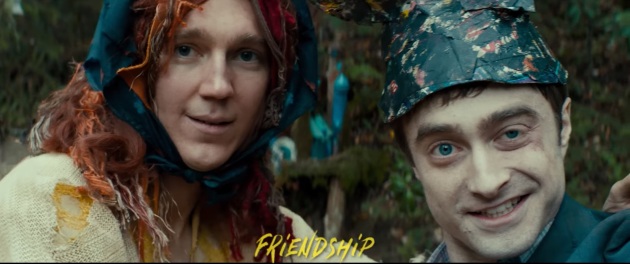
swiss_army_man_friendship

The illusion ends when a movie ends. The spell breaks and we must return to society and join the rest of humanity, who didn’t see what we saw, doesn’t maybe understand the possibilities out there. So too is the case for Hank and Manny when they leave their forest. A worry envelops that maybe Hank went a little insane, possibly he’s a schizophrenic. His growth remains evident, he’s now steadfast in his beliefs, but he has to answer to the normalcy of the world. The movie doesn’t cheapen its narrative by only providing the triumph of epiphany. The rest of the world doesn’t forgive your failures and mistakes just because you suddenly love your farts. But the film’s final shot knows it matters for something, even just to yourself.

Who knows why I’m so obsessed about the fart thing. That’s what this movie’s done to me. I kind of laugh every time I read or hear Swiss Army Man described as the “farting corpse movie.” Because no doubt, that’s what the movie is. Sort of proudly so, too. But you leave unsure of who was the real farting corpse: Was it Manny? Or was it Hank? Or was it perhaps the rest of us, sleepwalking through life, ashamed of everything about ourselves, including our farts, until the day we die?

(And…..cue the whoopee cushion!)

Don’t you see? Farts are just funny.

i hate facebook too but still use it just like you

social-network12

We forget Nicolas Cage used to be a great actor. He was in Adaptation at least, a loopy movie written by Charlie Kaufman. The film regards Kaufman’s attempts to adapt Susan Orleans’ The Orchid Thief into a screenplay, only he can’t. He fails, stultified by an extreme case of writer’s block. He spends a lot of time masturbating.

This was, as Kaufman has revealed, part of the true story. He couldn’t successfully spin the materials of Orleans’ book faithfully or honestly and instead turned the assignment into a farce about the writing process, Hollywood adaptation, and our passionate desires. The last is where both Adaptation, the movie, most directly draws from The Orchid Thief, the book. Charlie Kaufman, played by Nic Cage, truly craves to write this screenplay, only his pesky human insecurities and ego gums up any meaningful work or breakthrough. He blames everything outward, like on his fictional brother Donald, also played by Cage (he’s really good in this movie!). He worries he’s balding, too fat. The conditions are never good enough to write. He believes it’s impossible to make a movie about flowers.

Kaufman searches for inspiration outward as well, constantly returning to passages he’s highlighted in the book. Like this one, that I myself like returning to:

“The world is so huge that people are always getting lost in it. There are too many ideas and things and people too many directions to go. I was starting to believe that the reason it matters to care passionately about something is that it whittles the world down to a more manageable size. It makes the world seem not huge and empty but full of possibility.”

You might think I enjoy this quote because of its existential underpinnings but you would be wrong. I like it because I think it explains Facebook.

Facebook is strange for many reasons. I often wonder why anybody continues to use it, especially my own generation of college-aged kids and grads, the very demographic the site exclusively pandered to in its inception. Facebook is decidedly uncool, more corporatized and middle-aged than other tech behemoths. (And this is in a world that includes Apple, no less.) Most people who still update their profile do so for positive reinforcement: a shiny new and attractive profile picture, a job offer announcement, trite opinions on news events their echo chamber will agree with, stuff to do with babies. It is more a portal for outward content than a social connectivity network. Online media heads all-too-readily reveal that they receive more traffic through Facebook than users entering their site’s URL into their browser. Feeds flood with articles—complete with a person’s snarky (“smh”) or enthusiastic (“!!!!!!!!”) comment—as person’s lives take backseat to news and information. That is, your feed matters more than your profile page, which used to be the opposite story. Perusing a person’s photo albums or quotidian life updates or banal thoughts posted on their profile page used to be the prime feature of Facebook. It wasn’t the first to connect and host online personas—there was MySpace, AIM, Friendster, etc.—but none coalesced and eased the experience like Facebook. I remember my freshman year in college someone openly worried in our hall about their new roommate because they didn’t have a Facebook; it was downright concerning someone you were to live with didn’t engage with Facebook because on some level it meant they weren’t engaging with the social experiences of being an 18-year-old. But that is no longer valid. If you were to search the profile page of anyone under the age of 20 now, you would learn almost nothing of what constituted their personalities except what older family members have tagged them in. Maybe it’s because they’ve “grown up” with social networks, learning the skills necessary to finesse the glossiest of online images, or they’ve flocked to newer apps (Instagram, Snapchat) they find much more appealing. Probably both. And both answers point to the deeper truth: Facebook’s brand is really fucking lame.

The quickest indicator of this is none other than Mark Zuckerberg himself and his capsule fashion: gray crew neck shirt, jeans, and adidas flip-flops every day. Admittedly, this is a cheap attack. Steve Jobs was similar—black turtleneck and jeans—and there’s something zen to the capsule fashion movement (downsizing your wardrobe exponentially to remove the stress of choosing what to wear every day). Barack Obama and Christopher Nolan are guilty as well of participating in capsule fashion. In his press tour for because the internet, Donald Glover wore the same outfit—mustard-tan chinos, white tee, shearling jacket and hat. But he was trying to blur the line between online and public image; that our online personas are really just a performance, whether we pretend they are or not.

And wow I got off track there. This always happens. Anyways, as much as capsule fashion might be a movement of the highly successful, it can be alienating to the youth. Thanks to hip hop, fast fashion, and celebrities, among other reasons, fashion and more importantly style weighs heavily on their minds. Perhaps it’s because their friends are liable to snap videos and pictures of them at any moment, but their dress matters significantly because it says something about them. Fashion has always been expression and millennials, if you hadn’t noticed, really care about expressing themselves.

So even though Nolan always wears a sports jacket with dress shirt and Jobs had his black turtleneck, both are still “looks.” Their wearer is aiming for something. A gray tee is bland; it is the rejection of any look, too above it all.

Maybe you think I’m reaching with that, which is fine. We’re allowed to disagree. But this I find irrefutable: Facebook cares much less about the outfits of its users, i.e. their profile pages, and instead concerns itself chiefly with distilling the chaos of constant information on the internet. The internet is a formless mass that expands infinitely. We often lie to ourselves this isn’t true. We stick to our corners of the web, ones we feel safe in, and rarely venture out.

As much as I’m complaining, internet life wasn’t that much better pre-Facebook. It was confusing and consuming. There was a lot of random Google searches trying to find sites for things I was interested in. After the labor sometimes I found nothing, sometimes one site to serve one interest of mine. That’s why Facebook in its current incarnation works. It whittles the internet “down to a more manageable size.” Makes it seem a little more positive, too. Because most of us are too scared to venture on our own, we need the guidance. Not much shame in that.

But it can also be a crutch I’m realizing. I’m not sure I trust the algorithms. It seems more networks are pushing algorithm-based feeds, like Twitter and Instagram. All networks want to grow, not remain small and exclusive. There’s not as much money in a website to host just you and your friends. They need advertising capital, celebrities. It all has to expand somewhere. Facebook’s value lies in users corporations can sell stuff to. I don’t know what that means. Facebook’s utility is less a social network and more a tentpole you share with your “friends.” Everything else about it sucks except for that.

The Information Act: On feelings, media, and Snowden-ing in the digital age

reddit-hate

1.

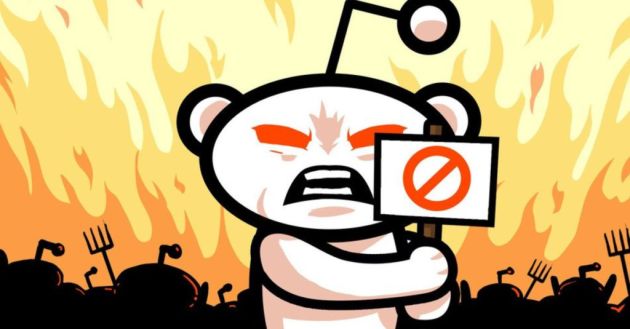
Sometimes I don’t know who I’m supposed to hate. It can be a confusing emotion. That hate is human, however, that it is core to the experience, seems firmly established: Hate, as I see it, is the kneejerk reaction to rejected love, promises, beliefs, and realities. And who doesn’t have those?

Even if you despise that idea of hate (which could just be read as more proof of its existence), there’s still ‘hate,’ like we toss out the term now. He’s a hater. I hated that TV show. Fuck hating-ass Donald Trump. Him and his hater army should drink some haterade. You get the point.

That there’s all this hate floating around likely explains my own retreat into sports. My emotions needed somewhere to go and games create a sort of alternate reality for everyone to occupy. Within this context, it might seem perfectly reasonable to scream phrases like, “Die, die, DIE, you janky, long-neck mother fucker,” as five guys collapse onto an opposing star quarterback like, um, just for example, Peyton Manning. Or, in your sports safe space, it is not out of the ordinary to imagine delivering an iron crowbar to the knees of Paul Pierce (another star chosen at random) because you swear to God if he lazily baits one more bullshit foul you’ll stab the damn crowbar into your own eyeballs just to end the visual torture. All of this seems normal. It makes sense as heightened tribalism. An us vs. them attitude. That team is trying to stop ‘us’—who I love, who I believe should win, who represent my hopes, desires, dreams in a physical sense—so fuck them and everyone who fucks with them. Hating follows a logical explanation, not an emotional one.

This (should) complicate with age. You (should) develop some empathy and (should) realize it’s just a game, even it’s only after the fact. Because of my foray into sportswriting during my time at Florida State, this transformation happened without my realizing. The goal, as a writer, is to identify these athletes as humans ripe with potential and meaning, with stories. To see them not as players but as people. Experiencing these stories through longreads, an Outside the Lines piece, or just following these dudes’ Instagrams (should) have a similar effect. Not hating ends up following an emotional explanation, not a logical one.

2.

But it is not always this easy. Life, as much as some argue otherwise, is not sports. Again, in discussing hate, what I’m really describing is unresolved anger/frustration/turmoil/etc. Rational thought might lead one to seek a conquering of one’s self; that if one could accomplish this feat—and accomplish it perpetually as it’s a neverending war of sorts, considering life beats on endlessly and fresh problems appear throughout a lifetime—one might discover a fulfilling life. Hate, one realizes, taps into the same vein as love, birthed from the same chemicals and properties of it, and the expression of hate might stem from a lack of loving one’s self. So if one could learn to love one’s self, the problem might disappear.

Now that sounds like a lot of work. That “neverending war” bit? And really, “the problem might disappear”? So it’s basically a wash? Upon examination, that paragraph starts sounding like a lot of pleasant rhetoric masquerading as erudite philosophy. As if some 23-year-old stumbled upon ‘the secret’ and here it is up front for you. It could all really be that simple.

To which I say: Who knows? Maybe, probably not, possibly. Regardless, those are me and my thoughts. What I’m dealing with currently. I’m also realizing my broad explanation of hate might be like the 1B. definition, not the entire scope of the term. Thinking about it, hate has infinite possibilities.

3.

Bridge of Spies is a very good movie I did not expect to like. It follows Tom Hanks as James B. Donovan, an insurance lawyer assigned to defend Rudolf Abel, a recently captured Soviet spy. No one expects Donovan to argue valiantly on his behalf amidst the backdrop of the Cold War. His firm, friends, and family all but demand him not to. Instead he does and loses all the way to the Supreme Court. But then Francis Gary Powers, an American pilot on a secret U-2 spy mission, gets shot down and imprisoned in Soviet territory. Donovan receives backchannel messages requesting he negotiate an exchange to take place in East Berlin: Powers for Abel. The movie threads these narratives from there.

Tired subject matter (Cold War espionage) and its star explain my low expectations. I find Hanks’ acting too self-serious and self-regarding; he usually chooses roles where he represents some virtue inherent to living as a paragon. He always plays the Good Guy. It’s not that compelling to me is all.* Hanks doesn’t sway too far from that guy in Bridge of Spies.

* Whenever a director attempts to undercut this persona, though, it’s rather intriguing. Like in the Toy Story movies where Hanks voices Woody. The point of that character is that he takes himself too seriously, is too needy for glory. Every Toy Story movie reminds us we’re not always meant to play the hero in our story, we’re not always to be regarded as ‘special.’ Meanwhile, Cast Away might be the funniest unintentional comedy ever made, as everyone who has screamed “WILLSSSOONNNNNNN!!!!!!” at a volleyball recognizes.

It’s been a critical darling, though. Before its Oscar nominations it had underground buzz. Steven Spielberg’s directing is gorgeous, conveying emotional notes and narrative dynamics through every shot; it’s extremely motivated filmmaking, really. Mark Rylance’s performance as Abel certainly elevates the picture.
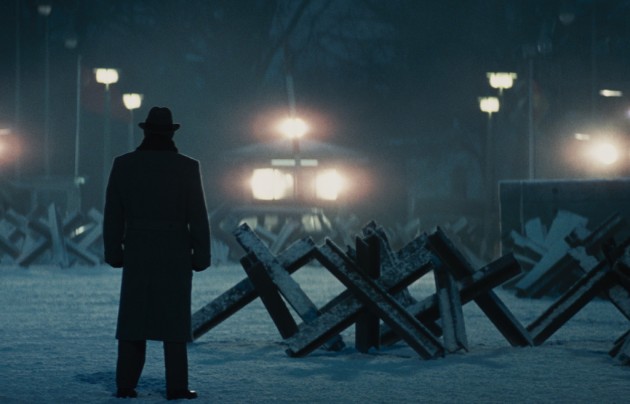
‘Bridge of Spies’ by DreamWorks Studios.

This is not why it’s been a popular movie, if I had to guess. In the mainstream but also for the critics and cinephiles. It’s about this mix of nostalgia and coherence. You understand the ‘villains’ and their motivations: East Germany, USSR; socialism, totalitarianism, erasure of America’s influence and ideals. Not knowing this history and these enemies is simply not allowed growing up a certain age. Teachers, grandpas, aunts, family friends repeat stories also seen in the film: practicing hiding under school desks, or filling bathtubs with water, a resource that’d be lacking in case of nuclear fallout. This too was Spielberg’s childhood. “It’s as close to my life as you can get,” Spielberg has said.

Back then, it was no mystery who drew our ire. Tribalism lines were sealed with concrete blocks topped with razor wire: Americans vs. Russians; freedom vs. socialism. When I watched Bridge of Spies, I could feel the audience relax a little, sigh some relief. It was all so comforting knowing who we were supposed to hate.

4.

Everyone’s always trying to save the world in movies. Probably because someone always wants to destroy it. Those are the stakes in big blockbusters anyways. I mean, how many cities sieged, how many nuclear launch codes stolen, how many loved ones kidnapped, how many apocalypses, how many secret chemicals with weird names, how many planet-ending devices stashed in dubious safes, how many radioactive spiders, how many dead presidents, how many alien invasions, how many mechanized robots evil and good can there really be? At what point do the fear of these threats dissipate a little bit?

I’m not complaining. I’m not. I love this popcorn garbage. I’m just identifying trends and why it’s interesting when new ones develop. It’s almost a way to stock whatever we as a culture fear most. Then, to alleviate that fear, our hero conquers it. For example, following 9/11, it was quite vogue for filmmakers to annihilate mid-town Manhattan. Avengers famously did it. I Am Legend did it. The Day After Tomorrow, Cloverfield did it. That strange Nic Cage movie Knowing felt rather explicitly about the guilt and fear that swept the country post-9/11.

That’s (mostly) over, though. I mean, directors still like blowing up the planet and that will never change. But new threats, in a globally dependent economy, in a world where attacks are perpetrated by jihadist groups not countries, in a time when more people are more connected than ever before, are more insidious. Or maybe blockbuster sequels have run out of ideas. Both explanations are plausible.

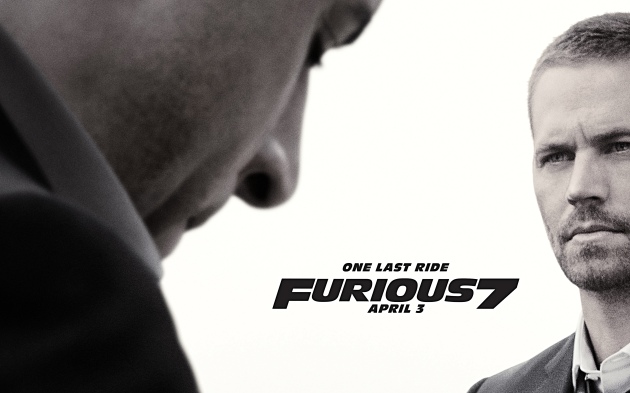
Look at something like Furious 7, a movie in which I did not cry when that Wiz Khalifa song started and Brian teases Dom for trying to leave without saying goodbye and that Paul Walker FF montage plays and Vin Diesel states they’ll always be brothers and their roads diverge and … no tears at all.
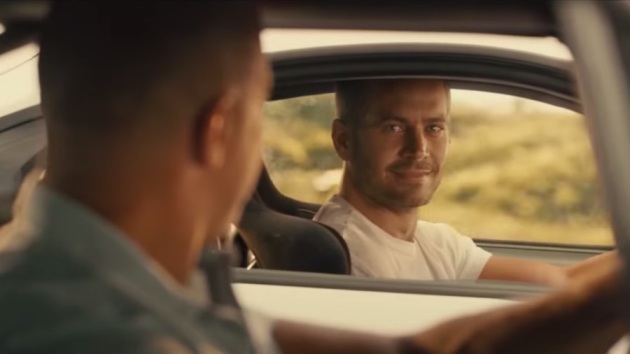
vin-diesel-paul-walker-furious-7-honest-trailer

But the film’s plot. It revolves around a program called God’s Eye, a software that utilizes every smartphone and camera worldwide along with facial recognition technology to track individuals. The team acquires God’s Eye, uses it to track their villain, loses it to the villain, and ultimately destroys it to defeat the villain. (Then that emotional stuff happens.)

A similar technology presents itself in James Bond: Spectre. The 00 espionage program, and James Bond, have been deemed obsolete. C, the head of the private Joint Intelligence Service, aims to push Britain into “Nine Eyes,” a joint surveillance operation including nine first-world countries. It’s revealed Spectre, an underground terrorist group Bond has been tracking, instigated attacks to convince waffling countries they needed “Nine Eyes.” In exchange Spectre would be given unfiltered access to the program. Bond, of course, stops all this from happening and saves the day. The 00 program continues. “Nine Eyes” does not.

Mission: Impossible—Rogue Nation has an identical plot (although it’s a much better movie). Ethan Hunt believes a secret criminal group called the Syndicate exists, though, like Bond in Spectre, no one else does. And like Bond, an outside CIA man believes Hunt’s organization, the Impossible Missions Force, should be disbanded and succeeds in absorbing it into the CIA. Hunt eventually learns through his mission-impossibling the Syndicate was real and created by the British government to track and destroy enemies without detection or accountability. But the Syndicate went rogue and the government can no longer control it. They tried to cover it up but can’t. A big plot point involves Tom Cruise’s risky business in the field (a meta joke I appreciated). To prove everyone wrong, Cruise gambles and captures the Syndicate leader. He wins. Secret government courts reinstates the IMF, recognizing the importance of individuals in the field. Monitoring countries uninhibited and the Syndicate influencing change unreported ceases.

So. The movies aren’t really feeling mass surveillance, huh?

5.

Emotions are short-term solutions. They are episodic responses of fluctuating neurochemicals responding to stimuli. They are fleeting. You pull weeds in a garden and a snake pops out. Your grandmother says something racist at Thanksgiving. You eat bacon. You overhear some skank make insinuating comments to your boyfriend. Emotions are involuntary reactions to fix an immediate problem.

In some ways, they can betray you. Without your doing, emotions show up on your face all the time. This is because humans used to be stupid (and some still are). Facial tics stem from paleocircuitry within your brain, where most nonverbal communication is stored, back when we lacked verbal skills. Because we couldn’t say it, our face had to communicate for us. I’m happy. I’m scared. I’m disgusted. I’m sad. I’m angry.

I had a public speaking professor at FSU who I remember saying, quite frequently, that 70 percent of communication is nonverbal. This, I learned, is a wildly disputed figure. Most numbers stem from two studies conducted by Dr. Albert Mehrabian in 1967. We’ll skip the details, but he concluded this oft-repeated and misrepresented figure of 55/38/7. Those numbers indicate factors of communication: 55 percent equals body language, 38 is tone, and 7 are the words actually spoken. But Mehrabian only intended those numbers to be context-specific, in which the messages relayed via nonverbal and verbal channel are incongruent. For all other communication, those might not be the precise figures.

But the specifics are irrelevant. Let other people worry about the exact numbers. What matters is the idea behind them: That a significant portion of communication occurs nonverbally. How eyebrows pinch or high-pitched a voices rises or breaking eye contact during a crucial confession. It’s an idea we all agree upon without ever really saying it.

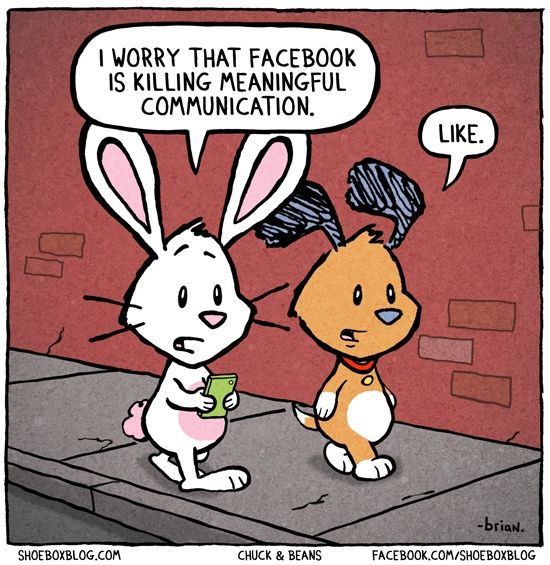
This is what most technophobes fear about the Internet and smartphones. That we lose something crucial to human experience and communication as we exist more and more in these channels. But these people also ignore how conservation has evolved in digital spaces. We #invent ways to *~express~* $h!t and how we reeeeeaalllly mean it :).

Between two people, communication in the digital age hasn’t changed. No different than writing letters. In some ways, I’d argue it’s better. Hyperlinking, sending memes, GIFs, instantaneous delivery. Screw a To My Dearest Abigail, have you ever received any cute cat GIF ever? Brightens your whole week.

The caveat: Social media changes the equation. When critics invented “mass communication” as a term, it only ever meant one sender to millions of receivers. But social media inverts that: One receiver to billions of senders. It is like being thirsty, finding a water fountain, pushing a button, and four waterfalls rain overhead. Not only is it your job to drink, but you also must find the streams of quality water. Because tons of people are plain shitty communicators.
facebook-communication

6.

Any conversation involving mass surveillance circles back to Edward Snowden so instead let’s just start there. To recap: Snowden is the infamous NSA whistleblower who leaked numerous documents to journalists revealing the breach of privacy governments around the world break to collect information on individuals. The main culprits are, but not limited to, Australia, New Zealand, Canada, the United Kingdom, and United States. They comprise “Five Eyes,” or FVEY*, who circumvent domestic law and spy on each other’s individuals, sharing that intel amongst one another. It’s kind of terrifying to consider what they do and don’t have on you. This is why I don’t send dick pics.**

*Yes Spectre assuredly stole that name for its fake “Nine Eyes” organization and why that movie stunk: It wasn’t trying to be a James Bond movie; it was trying to be a mass surveillance movie.
**Among other classified reasons…

Snowden also (sort of) starred in the best thriller picture I’ve seen in years: Citizenfour. The documentary details the account of Laura Poitras and Glenn Greenwald (then later Ewen MacAskill) meeting Snowden in a Hong Kong hotel where he plans to leak the aforementioned documents to them. Paranoia haunts them as they fear US and UK governments seem to be on their tail. To be fair, weird shit happens: at one point a fire alarm rings on and off, almost as a bait to force them out of their protected hotel room. When Snowden calls the front desk, they inform him it was just a test.

That countries spy on each other is nothing new. Information is invaluable. This becomes more so as individuals’ impact lessens and technological advancements’ increases in the battlefield. A character in Bridge of Spies literally says this: “We are engaged in a war. This war does not for the moment involve men at arms, it involves information.”

Appearance has changed as well. Spies no longer look or act like Vin Diesel or Daniel Craig or Tom Cruise or even freaking Austin Stowell; they look like Edward Snowden. They are Edward Snowden. And he is not cool. He is a dork. A very, very intelligent dork I respect immensely, but a goddamn dork nonetheless.

What mass surveillance means as a violation of our citizenry is not very interesting. The answer is simple: It just is. To steal from Snowden, saying you don’t care about mass surveillance because you have nothing to hide is identical to saying you don’t care about free speech because you have nothing to say. Rights and results remain separate influences in determining policy.

Behind both ideas, however, lies motive. It’s easy to understand those who support rights: Individual freedom protects a democratic people from the unstoppable power of a tyrannical government. Activist groups often stretch this idea to unnecessary means, losing their shit upon any perceived infringement of those rights, say, background checks for gun purchases. That isn’t always a bad thing, but also like chill.

If you asked officials and supporters of increasing mass surveillance, their answer would point to stopping terrorist threats like the recent Paris attacks from happening again. You get the sense these people truly believe in a Minority Report world, where crime becomes foreseeable and stopped before it ever happens. They wish for a secure existence against outside threats. They wish that our country just might be safe. But I think that’s only half the truth.

“When they use the word security, they’re not talking about safety. What they’re talking about is stability,” Snowden said. “Like when they’re saying they’re saving lives by bombing them. Stability is the highest value. It’s not about freedom, it’s not about liberty, it’s not even about safety. It’s about avoiding change. It’s about ensuring things are predictable, shapeable, because then they are controllable.”

Now that I can understand. I see why people believe in it.

7.

My friend called me a disease the other day. It was one of those friendly pokes disguising a truth. Like all millennials, we participate in a friends-group message.* Some days it’s popping, other times it goes ghost. Even in interpersonal texts, it’s how we communicate. Days pass in between responses and no one’s insulted by it.

*If you’re over 32, it’s just called Slack.

My friend explained this was my fault. At some point in college, I started communicating like that, and over time it infected everyone else.

He’s not wrong. That is my preferred style of texting, emailing, what’s apping, etc. Admittedly, this is pretty abnormal for a millennial Internet kid. I’ll borrow a new friend’s phone, taking a picture or whatever, and message notifications run nonstop. Anxiety creeps in and I can’t wait to pass it back. I don’t need more waterfalls overhead.

It seems to only be increasing, too, as no one’s part of just one group either, myself included. Text after Instagram like after GroupMe alert after email buzz after Twitter follow, the notifications never stop.

Now being the semi-shitty aloof communicator I am hurts me. Not even as means to breakthrough as a writer, or a ‘creative’ or whatever moniker, and gaining attention, but a as human being who values intimate relationships the older I get. My lack of responses might be explained in simple terms: I don’t have anything to say or I haven’t formed an opinion yet.

But that’s not true. Honestly, I just feel too busy most times. Not an hour passes where I don’t believe I should be accomplishing something productive with my time. This leads to more anxiety of what should I accomplish then and sometimes a debate rages internally with both sides delivering equally compelling points and an hour’s gone and I’m checking Twitter again and reading Kardashian Wikipedia pages because damn that’s a fascinating history and a couple more hours pass and I still haven’t done anything. So then I feel I lack enough minutes to spend keeping up with friends and I don’t. This is not a healthy existence.

Time has become a perpetual micromanagement of evaluating what is and isn’t worthwhile. As I’m on my phone, friends texting and DJ Khaled snapchats and Bernie Sanders’ tax reforms all blend together as equal parts of this machine. Usually, DJ Khaled snaps win out because who doesn’t want to know the pathway to more success? Probably some bing bong like Paul Pierce because he’ll just foul his way there.

DJ-khaled-another-one-merch1-e1449689736135

8.

What I hate is not knowing how everyone else feels. I mean, everyone sure seems eager to tell you what they hate, but I never believe it. Not on “the Internet”*, anyways. Most times, someone says or writes something (slightly) inflammatory, it catches the wave, and soon everyone’s crashing over everyone to ride it. It’s almost like a game: Who can torch the trending topic the quickest or loudest or funniest?

*The Internet= blogosphere, ‘online magazines,’ and Twitter. The greatest trick that group ever enacted is re-branding themselves as “the Internet.

Most times, this mob rage distills down to a) a perceived infringement upon one’s rights to identity or b) an opportunity to extend a brand. Joining a social cause has sadly become the trendiest act a millennial can perform. It means you’re part of something. It means you’re Good. It means you’re #important.

Which is fine. I enjoy being those things, too. Any young person does. That’s why we’re the lost generation or the unknown generation or the “me” generation, as if no other generations in the past century have been either. (Hint: They were all one of those.) Unlike others, we have a “voice” in social media. We can place thoughts, feelings, selfies into the world and for whatever reason people pay attention. We can point to proof of our existence.

But I’m not sure it’s helped anything. No topic seems as confusing as identity currently is for young people, except maybe why white people love Peyton Manning so much.* And I think it starts with this constant deluge of information piling on our heads every day. There’s about 17 news bits you should either care or know about and that’s just when you wake up. The information, it doesn’t stop. And don’t forget the wealth of history elders repeat you don’t know enough about. And don’t forget that so many historical narratives are tangled in bias and shaded coloring of half-truths you must read a dozen nuggets of articles and possibly a book just to encapsulate a big picture of the thing. Which just returns us to the central dilemma: What am I supposed to think? How am I supposed to feel? Who am I supposed to believe or trust?

*Okay I’m done.

This constant processing of information forces these perpetual critical evaluations of the self. It’s like being asked the big question numerous times with slightly different wording: Who am I? Because you must know that before answering and understanding everything else. But that’s assuming you live a conscious existence where you’re even wondering about all this crap. I get why most don’t. Some people just prefer believing the Matrix is real.

I have this fun trick I like to play whenever someone delivers a CAPS-LOCK screed online. Every time they declare they “HATE” someone or insists someone has gone too far and we should all be upset about it, I change their words to either “I wanna be needed!!” or “I’m alone.” I realize that trivializes things, but it’s my defensive mechanism from overloading on all the rage. We’re all just trying to get by in our own ways, really.

Because, really, we put ourselves out there too much, often exposing ourselves in potentially harmful ways, because deep down we’re just scared. It’s why we create these enemies just to beat them down. It validates us. It proves we have purpose. Or something like that.

Great. I’m back to the start of this whole dilemma: Hate is a misguided feeling and motive as any other. Sometimes we hate socialists, other times (kind of) ignorant celebrities, technology, and also ourselves. Everyone’s pretending to know who they hate or the why of it. We’re all just confused about it as we ever were.

So I’m picking an enemy at random to funnel our meandering rage and I choose penguins. I don’t trust those beaky, tuxedo fuckers. Who wants to look classy all the time? Are you trying to say you’re better than me, penguin? I swear, if we don’t instill anti-legislation they’ll ruin this country yet. Join me in the new war against penguins. We can all be in this together.
millennial content vol. vi: H-O-L-I-D-A-Y-S

Christmas Lake blur

Holidays remind me how conservative I am. Reduced to its essence, conservatism insists a sort of cultural stasis be maintained. And no holiday leans right with it like Christmas.

Tradition really equates to repetition in motion. Reunited families for holidays. Turkey, potatoes, green beans, and bread product at dinner. Presents in the morning. Stunted emotional interactions. Encouraged alcoholism. Fights.

Winter holidays: A yearly ritual like any other.

Christmas can’t be the term to describe it all, though. H-O-L-I-D-A-Y-S. Only that, please and thank you. Really all that PC talk is just proof of an ideological divide stuffed through a self-masturbatory glory hole. This is how we reach a War On Christmas. Really I don’t care.

Probably because my insecurities never breach beyond myself. Rather, the outside world doesn’t dictate my identity and issues with it. Another lie, try again. Okay here we go. What an outside public requests or demands kosher holds no bearing personally so long as throughout a closer inner circle those signifiers and conservative traditions repeat exactly the same into infinity. Nailed it. A highly reasonably request I find.

That describes accurately enough what happened this year, anyways. I got what I wanted. More questions about my current career ineptitude than desired, but if there’s one thing I’ve grown skilled at, it’s slipping those probing jabs. “Got some opportunities over the horizon” followed with a cross-up of “Stats lie, the economy just tightened, not bounced back” and knock ’em out with a “No, mentors and industry friends tell me I’ve been super unlucky…there’s absolutely nothing wrong with me at all.”

And still reigning undisputed mediocre class underachiever of the world, by a sixth-round TKO, in a stunning upset…Me.

To get away from already pretty much being away from it all, I ran. Nothing too dramatic, just a loop and a backwoods trail I hit three times. Over the years, I’ve understood a cabin fever or S.A.D. sets in if you keep hiding from the outside world this time of year. Particularly when gray days and snow seem like they will sustain existence forever. Rest too long inside, the same feelings bouncing off the same people in the same setting and you start understanding murder. Cannibalism and the zombie apocalypse aren’t too far behind. It’s probably why God invented seasons.

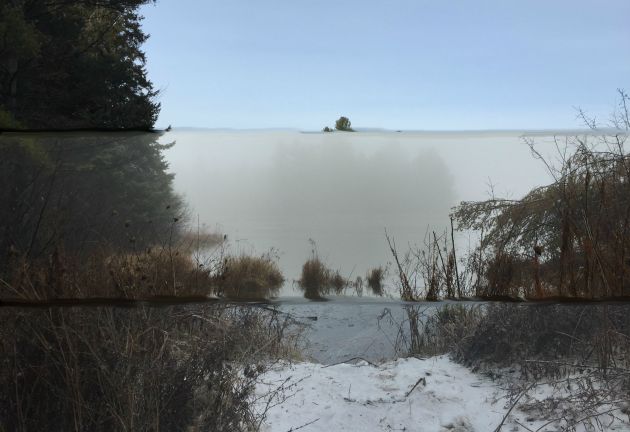
So I kept hitting this woodsy trail that hit a picturesque view of Hidden Lake. While I desperately wish that was a clever metaphor, this is in fact the lake’s name. And the first day I ran mist absorbed the view, like we were in a Stephen King novel. The second time spooky setting and feelings dissipated, revealing deep blues and popping greens and textured browns and it was all such a beautiful day. But the final day it snowed, the trail icy, and everything gray.

Not only did this perturb me as human but also as writer. Where in that is there a metaphor? How does that cycle unmask a fundamental existential truth? Only one reasonable deduction from the sequence exists: That life functions at randomized chaos that’s sometimes ultimately meaningless.

Who knows. Just another confusing unimportant question I ask myself. Holidays are fun because they’re mostly the same within a day-to-day so often frustrating and incoherent. This is why children grow up to be conservatives one day. It’s such an easier fight to stay the same than reinvent yourself. Just ask your parents.

Cinéma vérité: Movies and life in 2015

FullSizeRender (3)

I don’t think 2015 was a very good year. Few individuals might dispute that, but it seems a pretty universal feeling. A lot of bad shit happened, we talked about what that bad shit happening meant, then not much changed. Everyone just kept going.

This year wasn’t a good one personally either. No one enjoys labeling a period of their life ‘bad’ but that’s what it was. I didn’t like 2015 and I didn’t like the person I was for long stretches and I didn’t like pretending otherwise for the sake of those around me. This year was, as they say, not a good time. It was bad.

Which possibly explains my increasing trips to movie theaters. It has been my means of escape for quite some time now. Going to the movies for me is like visiting another planet where I’m not allowed to bring any baggage. Not even a carry-on. Nothing matters outside these characters and their stories and sometimes there’s popcorn.

I also happen to enjoy attending movies alone. Not always, of course. That would be a bit too depressing even for me. Movies not only transport you elsewhere, they also have the ability to place you within an altered head space. They can instill a mood that permeates your being, changes your perceptions, alters your concept of self. This may be one of those situations where I’m describing an experience that’s simply personal, but I don’t think so.

Somehow I found myself arguing with my parents over the holidays. It was about this. For some movies, I actively prefer to go alone and it’s because of this whole movies-as-drugs metaphor I’m describing. When I find myself in this haze leaving the theater, I try to make it last as long as possible. I drive without the radio or I don’t check my phone or as I did after seeing Lawrence of Arabia two months ago, I walk aimlessly. It’s not just because I like existing in that space, but also because I need time to process. Some films open up or reveal gaping holes inside me I didn’t know existed (or more accurately ignored). It’s what I call the great big forever nothing feeling. Standing at the edge of that great big forever nothing feeling can be terrifying, but it’s also healthy because it forces a type of personal confrontation that wouldn’t otherwise occur. It’d just lay dormant, quietly expanding, and eventually consume you. Then you die.

But anyways, this argument with my parents. It was more a discussion really, but it involved me explaining why I see some movies alone. We didn’t get to the great big forever nothing feeling because that’s not a normal conversation to have with your parents. Instead I came across with a bitch, don’t kill my vibe tone and my mom pointed out I try to establish control too much on things that don’t matter. Which, I kind of realized, was true.

The longer I live the more it feels like angst-ridden chaos is the default state for reality. The world does not act in a consciously beneficial way. It shits on your face at will and that’s just a random Tuesday. Not much of what you truly want happens. And if it does, it’s usually not on your schedule. Viewed with a particular lens, it begins to seem like everything outside your grasp is always out of control.

And so, the things you can control imbue a different weight after a while. I have accepted the shit-flinging chaos for the most part. I’m at peace with it. But I’m still trying to determine what small things do or don’t matter and which to exert arbitrary control over. Maybe I’ll figure it out in 2016.

Anyways, that was my roundabout way of explaining why I’m writing this again. I like watching movies and I wish I saw more than those on this list below. This is my continued processing. I’m disappointed the movies I’ve been most excited for this year—The Revenant, Anomalisia—won’t make this list of 2015 movies. One anticipated movie however did make the cut: Hateful Eight. It almost didn’t. The reason: I was waiting to see it with a friend.

So this list will do for now. I might update it later, but probably not.

Lawrence_6lg

45) Pitch Perfect 2

A toy brand masquerading as movie. Frustrating considering how rewatchable and joyous the original is. However, not as blatant a commercial as The Hunger Games finale was. I walked out of that theater because I didn’t want to miss SNL that night.

44) Paper Towns

I guess this is my fault pretending a movie based on John Green source material wouldn’t be cloying and preachy. I liked when that Bon Iver song played near the end; more movies should have Bon Iver songs.

43) Jupiter Ascending

Let them live long enough and your favorite artist will disappoint you eventually. This is because humans are messy and complicated and imperfect. Just like this movie was. But maybe we should stop expecting the Wachowskis to blow our minds every time.

42) Aloha

Not as bad as everyone wants you to assume it is. Not nearly good enough to defend it, though.

41) James Bond: Spectre

Somehow a Bond movie hitting rote Bond movie checkpoints from a watered-down Bond blueprint didn’t feel Bond enough.

40) Avengers: Age of Ultron

Something about alter egos surpassing the masks protecting them.

39) Trumbo

Anyone revolutionary will only be properly loved outside of their time, I guess. I liked Bryan Cranston’s capital-A acting in this. Louis C.K. did some funny Louis C.K. things. But it failed where most biopics fail: Too respectful toward its subject.

digging for fire

38) The Heyday of the Insensitive Bastards
37) Digging for Fire

The first is an anthology film borne out of James Franco’s UCLA film class. It’s lifted by Franco recruiting actor friends to establish some notoriety to the material, but the best shorts end up coming from unknown actors. The latter is Joe Swanberg’s attempt to make his searching Robert Altman-esque roving character epic. Because Swanberg ‘goes there’ with some of his films, he has an acting troupe as weighty as Franco’s. Both these movies would’ve been better with 75% less ‘actors’ and their associative baggage, though. But I might not have been as eager to watch either otherwise.

36) Southpaw
33) A Most Violent Year

Pleasant genre films that didn’t push any boundaries. Both enjoyable enough for a one-time viewing.

35) Focus

Similar issues but with more Fresh Prince.

34) Mississippi Grind

I could watch and listen to Ben Mendelsohn ask for more Woodfords on a loop and not be bored. Same goes for Mendelsohn smoking cigarettes, limply hanging out his mouth. I could watch Ben Mendelsohn do anything is what I’m saying. I really like Ben Mendelsohn.

32) American Ultra

Meanwhile, I really don’t like Max Landis. He wrote American Ultra and Chronicle, two quite good movies, which doesn’t balance his amateur troll act. He’s the worst kind of sort of smart person: someone who utilizes it for mostly self-masturbatory means and is proud of that fact.

American Ultra suffers from its connection to Landis. And by that, the critical online crowd would never judge this movie fairly because Landis wrote it. Honestly, I’m not much better. I liked this movie better than it’s ranked. Jesse Eisenberg doing his socially anxious outcast thing, Kristen Stewart as badass secret operative, Walter Goggins playing “Laugher,” an insane guy who just laughs, Topher Grace doing a Max Landis impression. Oh, and Connie Britton, a.k.a. America’s pseudo mother, is there. Here’s what I’m trying to say: It’s a good time, but still fuck Max Landis.

furious_7_2015_paul_walker_brian_oconner_101510_3840x2400

30) Furious 7

I lied to my family numerous times this year. Chances are so did you. This one was small: I promised my younger brother and cousins I’d take them to see this. They were eager to watch this movie with me/through my eyes because of my unhealthy obsession with all things considered fast and furious. On the way to the theater, I summarized the ludicrous plot lines and development of bromance disguised as ‘family.’ My synopsis kept repeating the line, “Guys, family is like super important to them.” They laughed and smiled. We enjoyed ourselves.

In reality I’d seen the movie the previous week. I couldn’t wait. These movies hold a special place for me that is quite personal yet universal enough that intensive explanation isn’t required. Either you buy the disparate band of outsiders forming a family in ways more real than your bloodlines or you don’t. Either you accept Vin Diesel as measured father figure and grounded superhero or not. Either you call your friends “busters” as inside joke or…probably not because I admit it’s a weird thing we do.

I will watch this movie many more times, though I wish I’d done it with the right people instead of alone the first time.

31) Mission Impossible: Rogue Nation
29) Going Clear: Scientology and the Prison of Belief

We make excuses for those we love. For me that includes Tom Cruise. I wish he wasn’t a scientologist, but we don’t live in that world. What he does and doesn’t know about the insidious religion might be debatable for some. What isn’t is that he benefits from his status of symbol. He gains from others’ misery.

Art remains separate from artist, though. I think it’s good these two films exist. Scientology is a separate matter, however.

28) The Gift

More asshole Jason Bateman please. The movie’s more than that but that’s what I want.

the martian desert

26) The Martian

Fair warning: I’m about to be ‘that guy’ here. The snob who evinces the book was better than the movie. So if you’re not here for that, feel free to skip ahead.

Anyways, The Martian is one of my favorite books I’ve read this past year. It isn’t a virtuoso piece of Writing, but a damn good story. It smashes an uncomfortable question into your face page after page: Why do we care to survive? Why do some of us risk everything to help others survive? It’s one of those great big forever nothing questions. A thought most of us have had but few ever verbalize. Within the book’s framework, it’s the only question that matters.

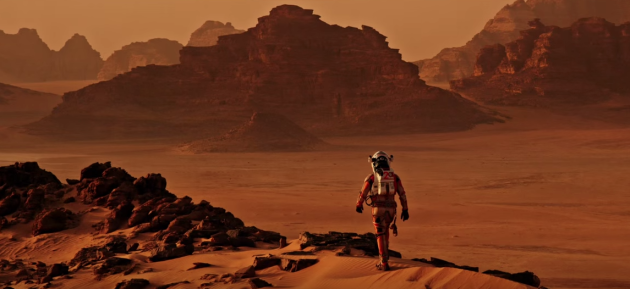
This consciousness doesn’t neatly translate to the screen. Director Ridley Scott hints at it, but focuses on his stellar cast of a survival team. It focuses on the how rather than the why. It’s more informative than emotive. That said, the film contains my second-favorite shot in 2015: A setting sun over Mark Watney as he scrambles across the Martian landscape to find escape. Solemn and yet gorgeous.

25) The Intern

Robert De Niro is a wonderful chameleon. So this was my reaction when I remembered the guy playing the delight of an intern also played Don Corleone, Jake La Motta, and Travis Bickle, among others.

deniro goes boom

24) It Follows

Horror movies are best seen with others. This I hold irrefutable. I happened to see a screening of this on my old college campus, which was weird because I kept waiting for everyone to point fingers and yell in southern rebel accents, “You don’t belong ’round these parts no more, boy!” and also because no one recognized me. I like to pretend I’m more self-important than I am.

That happens to be an apt description of this movie. Not that it wasn’t fun and good, it was. It Follows just ended up regarding itself too seriously. And the rules that govern the monster seemed to shift depending on the scene. I guess we’re all a little skittish about ourselves.

23) Maps to the Stars

The story of Cersei and Jaime Lannister, except everyone’s chill about it. And they’re only chill because they’re so blind judging themselves 80 times harsher than anyone around them. And no one’s satisfied. And someone accidentally kills a dog.

Weirdest movie I saw, which means I saw a David Cronenberg film this year.

27) Dope
22) Brooklyn

What is maturation? Typically, within coming-of-age narratives it involves some grand evolution of awareness and behavior. These movies have their main characters function in that way. Yet what I love about Shameik Moore and Saoirse Ronan’s performances is their recognition. They reach a point where they understand their outsider status and embrace it, but know that isn’t enough. Because sometimes those closest to us want us to change the least. Both these films hinge upon a moment: Would you rather remain where you are, comfortable and with loved ones, or try for something more, possibly at the expense of those same loved ones? I like how both films answers the question.

Also I really enjoyed Moore’s dancing during Dope’s credits. Already ripped some of his moves.

21) Steve Jobs

Can we leave Aaron Sorkin alone yet?

Jessica-Chastain-in-Crimson-Peak

19) Crimson Peak

I only see red when I remember this movie. The crimson red ore that oozes out of the ground and through the floors and slimes into walls. The fluttering red of romance between Mia Wasikowski and Tom Hiddleston. The red fluids spilling from dead bodies.

But mostly the red is Jessica Chastain. She transforms from manipulative mastermind into bloodthirsty monster entering the movie’s third act. Her performance isn’t breathtaking, it’s breath-stealing. Following a plot reveal, she absorbs every moment of attention when she’s on the screen. The moments she disappears, you edge forward, not waiting for her return but begging for it. Unhinged isn’t descriptive enough; she knocks the whole fucking doorframe down.

18) Straight Outta Compton

Ice Cube: “Yo Dre…”
Dr. Dre: “What up?”
Cube: “I got something to say.”
[“Fuck the Police” plays, crowd chants along, Bren’s brain ka-plodes]

17) Bridge of Spies

Ignore the American bravado and do-gooderness permeating this movie. Instead appreciate master Spielberg all-the-way trying on every damn scene to tell his story though the lens. Not a more motivated camera from start to finish this year.

16) Star Wars: The Force Awakens

This movie has 99 problems but stealing my nostalgic heart ain’t one. I pissed my pants when that floating text scrawled across the screen and heard bum-bum-bum-bah-BAH! I can’t wait to do it again.

15) The Big Short

A sad realization hit me watching this: I’m probably its precise target demographic. I care enough to know big banks control and exploit the American people more than I know. Basically I understand I should remain furious with big banks, yet possess zero understanding why or how or what measures these guys utilize to hurt us. So, yes, I’m the guy who needs Selena Gomez to explain bonds to him. This movie stands on its merit outside its informative properties, but um, I’m glad those were there, too. 

Creed06254.dng

13) Creed

Or: Meek Mill’s real diss track to Drake.

12) Citizenfour

Cheating with release dates to include it here, I know. But the questions raised internally haven’t stopped reverberating in my head since watching this. Many more thoughts on this later.

11) Spotlight

A very, very compelling film I’d likely never choose to see again. Not a condemnation, I swear.

14) Magic Mike XXL
10) Trainwreck

Excuse me. Allow me to slip into my mansplaining pants for a second here. A bit looser and worn than I remember and hey what’s this hole doing in the crotch and…

Jokes aside, fewer movies delivered a purer good time than these two. Sex, in its hottest and loveliest and awkwardest forms, can be found right up front. They make meeting female sexual pleasuring a notion to aspire to while not preaching it. Both will be highly rewatchable.

9) World of Tomorrow

Any discussion of Don Hertzfeldt begins with recognizing him as an unheralded genius. He is. But ‘genius’ almost belies his peerless craft. His movies hit you with truths so universal you already sort of know them. But he reaches them through an emotional journey so inventive and comedic you don’t see it coming until it one-twos you with simultaneous blows to the heart and mind.

I know this sounds like an oversell of sorts for a simple animation short. Don’t take it that way. Please just watch.

sicario landscape

8) Sicario

The prettiest paintings and ugliest truths of the year.

7) Room

So much of what’s sad about being a child doesn’t seem that way to a child. A lack of awareness inhibits any recognition of terror. Everything scary contains blurred lines and hazy figures. That ignorance isn’t exactly bliss—confusion and unanswered question might worsen situations—but it can ease the pain. Simply put, it’s easy to fool children. This applies to a concept like Santa Claus as much as it does rapists. Remove context, which children don’t possess, and meaning branches multiple insidious ways.

Room emotes this equation gracefully. The film begins with the fixed perspective of a child, almost tricking you into believing a sanguine explanation exists for why Ma and Jack live in Room. It zooms out slowly, and the wider purview allows the audience of adults to see things clearly with context and hard edges and dark characters. As the movie continues and more of the world opens to Jack beyond Room, the relationship of audience recognition and a child’s disregard for the tragedy around him stabs and twists and bleeds.

Yes, I loved Room: It never sidesteps messy explanations inherent to the story; it skirts the easy message. Too often victim narratives just ask audiences to bear witness, but Room doesn’t victimize for shock. Brie Larson’s Ma hurts her son Jack as much as she saves him. She’s given room to fall apart and put it back together. Some moments steer too heavily into earnestness (an example: Explosions in the Sky’s “First Breath After a Coma” plays when Jack witnesses the outside world for this first time), but most of it’s earned. Room’s emotional journey wasn’t just devastating, it was vicarious.

mistress_america_poster_midnight_marauder_2

20) While We’re Young
6) Mistress America

Finding your place in the world. What a phrase as often preached as it is misunderstood. Probably due to its self-sustaining nature: The answers are just as likely to point you back to the question itself as it is any solution. I say this as a member of a generation who genuinely claims experiences of ‘quarter-life crises.’ Don’t mistake me; I’m not mocking those people. Rather I identify with them, much like I identify with the characters of Noah Bambauch’s duo of photographic films. They are pictures depicting failure as necessity, wherein you look back on this journey of finding your place, feeling like you’ve come a long way, only to realize you went the wrong way. To solve this, both main characters choose to follow larger-than-life characters they just met. And why wouldn’t they? Adam Driver’s Jamie appreciates old ‘classics’, pulls off hip fedoras, attends ayahuasca retreats and doesn’t give a shit who judges him. Greta Gerwig’s Brooke appears to live the spontaneous New Yorker life every artist dreams and says things like, “There’s no cheating when you’re 18, you should all be touching each other all the time.”

How wonderful, or perhaps alarming, it is to recognize these two are posing just like the rest of us.

5) Mad Max: Fury Road

A cinematic experience so intoxicating and thrilling I fear any subsequent viewing might spoil how perfect it exists in my mind.

4) Ex Machina

It’s all here.

Wild-Tales-2015

3) Wild Tales

Take a conceit ripe with potential disaster—needing roadside assistance from your latest victim of road rage, discovering your spouse’s affair during your wedding reception—rip it apart, and pack its seams with explosives. The comedy of this Argentinian anthology film bubbles, then fissures until it erupts and you find yourself on the floor, slapping your neighbor, also on said floor, yelling, “Can you believe that just fucking happened?” You don’t and you do, which is why it’s so damn funny.

the-hateful-eight

2) Hateful Eight

I’m still processing Quentin Tarantino’s latest. It feel like some sort of trick: You don’t want to love something so intensely vile, yet…It’s such gorgeous, egotistical, hilarious, political filmmaking. Saying much more of anything could spoil the fun. Trust: You will be hearing many, many commentaries echo across the interwebs from this movie. It seems like that was Tarantino’s intention.

But god I can’t wait to see this movie again and again.

inside out

1) Inside Out

I want to say I’m as surprised as anyone to find this movie ranked here, but I’m not. My appreciation might change and focus on other films as time moves on. That remains a possibility. But I’m at a point of my life where…

I don’t believe this movie was made for children. While the presentation wraps itself in that colorful animated sheen, its innards contain rather explicit adult content. Which is: The more time spent alive the less incentive demands a full range of sensitivity. Apathy too easily can become a default setting, out of which springs a minimum range of emotional sensory. Growing up involves testing each endpoint, though. That’s where Inside Out places its focus. How does it feel to be truly sad or angry or fearful? Can happiness remain a fixed point? What memories constitute our core foundation of personality?

Things change. A simple fact of life we wage war against each and every day. It is such a gargantuan task to live in the present, because it seems to appreciate the present requires some distance by which point it becomes the past. Melancholic attitudes ensue, perhaps attempting to re-create the past, all of which impairs our futures. Seriously contemplating one’s life throws in flux any emotional stability one might hope to grasp.

Of course that is the place I find myself as I decide how to make a living/life for myself. This is a precarious moment to be sure and many others I know are going through it too. The checkpoints have been hit, the path laid before us has been traveled. We’ve reached the terrain where no easy answers remain. Some days an overwhelming temptation presents itself: To give rule to one emotion. Fear chases you into a stable career. Anger explains why the world hasn’t granted your desires. Do anything that re-creates the highs of Joy. Disgust leads to believe you’re better than everyone else. Wallow in your Sadness. Inside Out knows this: Adult characters conceal emotional ensembles all transfigured into one range of shape. Riley’s dad has given into a life of distraction and anger; her mother one of regret and sadness. And this, Inside Out reminds us, is no way to live. In order to have a full life, one must accept and answer all their emotions.

Again, I don’t think 2015 was a very good year. All the problems of the world reduce down to this giving in of single-mindedness. We all were lacking some serious empathy. A state of fear has consumed most of my country, leading to more guns, more police killings of black lives, more tragic shootings, more being okay with all that. Disgust played a role as well. Peek around different corners of social media and encounter bigoted anger, both liberal and conservative, or possibly the joys of frivolous egotism. Sadness…well that’s the one no one demonstrates; that is not an accepted state of mind around these parts. Those Pixar geniuses know this most of all, which is why the movie ends with a literal embrace of sadness. It is okay to feel that way sometimes. It is good to feel. That was a lesson all of us, myself included, needed this year.


millennial content vol. v: the american beauty of talking about A$AP Rocky

IMG_0922

The more I grow up the less I believe American Beauty is dumb movie. Slight clarification: Never thought it was a ‘dumb’ movie. Couldn’t buy its ‘meaning’ scene. That moment an artist nakedly reveals their core expression. Beauty is in the eye of the beholder but: A plastic bag dancing in the wind can’t be the most beautiful thing in the world. I used to feel that rather strongly.

Everyone seems happy I’m home. Including the local bartender. He recognizes me and fills my drink as I sit down. Our relationship provides the most comfort. He never asks anything of me except money.

I’m not sure what I’m running from but I’m running still. It’s not sad. Probably daily media reminders of our frail mortality. Guns, terrorists, heartbreak, the Jaguars losing, what racist morons will perpetrate to rid the fear we all feel. It can be a lot sometimes.

Anxiety and claustrophobia encroaches. I leave. I skateboard and snapchat myself. A$AP Rocky’s “L$D” rotates on the shuffle playlist. High and heartbroken I feel.

Lights blind me from a distance. A street aptly named “Candy Cane Lane.” Well it’s not a lane. It’s a cul-de-sac. And there’s no actual candycanes. I’ve never seen any. But everything’s bright and attracts neighbors and many photo-ops and overall creates a scene. Movies aren’t a dead medium.

We had a talk to agree we shouldn’t talk anymore. We talked about what we weren’t talking about to conclude why we won’t talk after this talk. This talk devolved into another talk regarding the last talk of why we stopped talking. Our present talk repeated the past talk. There were regrets expressed on talking again only to stop talking again. We talked some more after concluding we wouldn’t be talking following this talk so we felt pressured to fit in some final talk. Then the talk ended.

I forgot to ask about my sunglasses. I remain blinded by the light. Maybe I should write a song about it.

The next day I lie out beside the pool. It remains hot enough to do this though I don’t like that. I try to read but I can’t focus. My mind keeps drifting. Like a plastic bag dancing in the wind. Beautiful is a bloated word.

‘Justin Bieber’ and ‘Purpose’: bad brand, good music

justin-bieber-purpose-600x337

I recently have found myself in the not-at-all unique position of liking Justin Bieber’s music. Not in a way like, when “What Do You Mean?” plays in a public setting, I casually mention, “I actually like this song, man” to people. That could be explained, if not understood. But I actively seek out the stuff, download it for repeated listenings, dance alone in my room to it. I genuinely enjoy Justin Bieber’s Purpose.

For some reason I feel guilty about this.

Maybe guilty isn’t the correct word. As a concept, ‘guilty pleasures’ are dull and shallow. No one should feel guilty over what they enjoy, particularly if they can defend its merit (though there’s no pressure to do this). The more accurate word would be cheap. After listening to Purpose, the Biebs’ new album, I’m left a bit unclean hours later. Sort of similar to a post-coital shame walk across a college campus the morning after: Elated tingling, but shriveled and limp like a used condom.

It’s not Justin Bieber’s fault; it’s the fault of ‘Justin Bieber’. The new, cleaned-up, crying-at-the-VMAs, self-mocking public persona cultivated for him. It started with The Roast of Justin Bieber, which despite its overt intentions, was crude, hilarious, and inflammatory. Then the Calvin Klein ads aimed at establishing him as a sex symbol (until Kate McKinnon parodied them on SNL). Don’t forget the stops at Ellen and Seacrest so he could ‘explain’ himself. The public parade never stopped.

This entire rollout of the redeemed Biebs, the polished veneer on the thing: I don’t like it. It’s too shiny.

We all knew for a long time Justin Bieber was an asshole. The details hardly matter. What did is the perception of him: a spoiled prick needing a right cross to the face…but no one would ever do that because he was worth too much money. Which made it worse. So we all thought he’d stay a dick. He would fade away as another pop star What If?

But then Justin Bieber disappeared only to reemerge as the white prince of dancehall and a devout Christian. He teamed with mega-producers like Skrillex, Diplo, and BLOOD and collaborated with musicians like Ed damn Sheeran, Halsey, and Travis Scott; it was like he was actively trying to earn serious underground cred. The kid who was nothing more than a high-grade variable in a type of pop-industry formula was creating, god-forbid, music.

That was my reaction when I first heard “Where Are U Now?” anyways. He followed that with the tortured soul glam shots in Interview and the hazy flippancy of his “Maria, I’m Drunk” rap verse from Travis Scott’s Rodeo. This was all very confusing. Had Justin Bieber returned as an artist? He seductively licked a knife and wore a killer clown mask in the artsiest mainstream publication. He rapped and he rapped well. Biebervelli earned that goddamn alter-ego rock star nickname of his. Shortly after he dropped “What Do You Mean?” My brain exploded.

img-justin-bieber-7_143543614749

Strange times, indeed. As I stared at my gray matter and its guts sliding down the wall, I grinned. Admittedly, it was for personal reasons. I have grown weary of a particular narrative the media oft repeats: that of the young male star. An off-beat, exciting talent announces itself and is subsequently worshipped into hero status. Due to this pronounced new fame and blinding attention, our hero fucks up and falters. Drugs and/or women is usually involved. Depending on the misdeed, he receives lashes disguised as criticism and everyone ensures he learns his lesson. Hero apologizes. Normally it’s not good enough. A perception of damaged goods follows him. Hero must earn back his unsustainable reputation of Good Hero he never asked for. Sometimes it happens, sometimes it doesn’t. The cycle continues regardless…

I’m always glad when these guys make it through. A bit of solidarity, I guess. The Biebs seemed to be doing it on his own terms. He had become himself.

But as the time to promote Purpose approached, a new tone developed from Bieber. A softer one begging for forgiveness. He released “Sorry”, which was mind-blowingly okay. Too much of the same, too pandering, but it was fine. And he revealed his rediscovered spirituality in multiple interviews, sounding like a white hipster chick who watched Food Inc. and announced she was “going vegan” to anyone who’d listen.

It didn’t stop, this appealing to the broadest possible spectrum. That banal “I’ll Show You” video for example. It opens with Bieber traversing a narrow, curvy cliff path (a blatant metaphor for “Life”) and later running idyllically, arms wide open, like a reborn child, through luscious greens and clear skies. The video’s imagery is ripped from all the worst parts of Ben Stiller’s The Secret Life of Walter Mitty. But: Bieber’s wearing streetwear and Yeezy 350s so we know he’s still hip.

Celebrating the album release, Bieber released a ‘visual’ each hour to from “Purpose: The Movement.” The videos showcase a diverse array of kids breaking and intricate dance numbers, notably absent of Bieber for the most part. Very stylish and stimulating—like most of Bieber’s album—but it becomes repetitive. The final video for the “Purpose” track is memorable: It resembles a Mad Max: Fury Road almost-porno parody, but is super seriously a manifestation of creative genius.

I’m sounding down on Bieber and Purpose, I realize. It’s not intentional. The record is great pop music. “Love Yourself” captures that bitter yet hopeful spirit of past love. Fuck yourself but I still love you. I expect “The Feeling” to be remixed approximately 40 million times by DJs at festival next year. It hits that half-thought approaching lucidity kids rolling have—maybe I don’t love you, maybe I just love love and that might…hey, wanna make out?

The production is stellar: those iconic Skrillex chirp synths and those clocking bongos and the stripped-down acoustic stuff and the darker OVO soundscape it dips into. It’s (mostly) incredible.

But the record doesn’t go far enough. Where is the pain? The suffering? The heartbreak? The anger? The disillusioned angst? I can’t believe I’m saying this, but Purpose needs more Biebervelli. More asshole, in other words. It needs more killer clown mask and knife-licking. More F-U-ness. Something to provide a seriously lacking depth.

Producer BLOOD, in explaining “Sorry”, sums up the frustration: “the beat is saying moving forward, and apologizing, can be exciting and fun.” That is some 3rd grade bullshit if I’ve ever heard it. Same goes for a track like “Life Is Worth Living.” The title says it all. I don’t even want to discuss that “Children” record. I’m not up to stoop that low.

I’m most disappointed in myself, really. I forgot something crucial about Bieber: He is, unfortunately, a brand. Those tracks and this rollout campaign dripping with insidious PR intentions aim to establish a reformed Bieber image. It is not about the music or art or even what Bieber wants. The Entertainment Tonight-watching and Us Weekly-reading crowd need to feel like they can root for Bieber again. Certain demographics’ needs must be met.

That stuff I loathe. That type of American media is the mold ruining and stinking up the rest of the game. However, it does seem like Bieber’s operating on two levels now: atoned man in the mainstream and still a bad boy rock star in the underground. They both work. I’m a bigger fan of one over the other. The key to it all: Bieber finally seems self-aware. So maybe he did grow up. But I’d be okay with it if he didn’t.

Design a site like this with WordPress.com
Get started